Showing posts with label Nature. Show all posts

Saturday, July 21, 2012

Wanderings: The Hills of Querétaro

A horse grazes along the edge of a cornfield, Tenasdá, Querétaro

San Ildefonso Tultepec, Querétaro -- Every summer I spend a few weeks here in rugged high country of the Municipality of Amealco, along the southern border of Mexico's Querétaro state. I come to the area to teach, but always have free time to explore and enjoy the countryside.

The weather is changeable and the air a bit thin in this place more than 2600 meters (8500 feet) above sea level. The earth is red, and during the summer rainy season the land is green. The verdant hills and mountains, fields and forests loudly call an observer's attention. However I also find myself lowering my view. Everywhere there are wonderful things at my feet.


At this time of year, dozens of species of flowers are visible along roads and trails.  Sometimes one solitary bloom is all I ever see of a particular variety.


Other types of flowers grow in vast colonies that carpet the ground with yellow, pink, red, purple and blue. The blooms may last a few days, or as long as a week or two. Later-flowering varieties replace those past their prime, so the color patterns are constantly changing.


Other flowers grow in small clusters. This is interesting country because although during this season the land can be waterlogged and muddy, the area also experiences a cool, desert-dry winter when grays and browns are the dominant colors. Cactus and other plants common to arid climates are common.


The nopal, or prickly pear cactus grows well here, and this is the season when the tunas (fruit) ripen, offering a sweet treat to passers-by willing to deal with the large nail-like spines on the leaves and tiny hairlike needles found on the tunas themselves.

I was tempted by this cluster of perfectly-ripe tunas, and picked a couple for myself and my companion. I enjoyed the delicacy, but paid for it afterward, spending about ten minutes pulling the tiny spikes from my fingers.

Tender young leaves of nopal also are good eating. With spines carefully shaved off and the leaves diced or cut into strips, nopal makes a nice addition to salads and cooked dishes, with a flavor and texture slightly reminiscent of asparagus.


Several varieties of champiñones (mushrooms) pop up around here during the dampest days. I saw these growing under a fallen log. Not being an expert on mushrooms, last week when I spotted them I took nothing more than this photo.

However, when I came into the city of Querétaro Friday for a weekend off, I found myself dining on tacos of champiñones a la mexicana (local mushrooms fried with tomato, onion and green peppers) and sauteed nopal at a local restaurant.  

I have been trying to improve my diet by eating more natural and vegetarian foods. I'd had flor de calabaza (squash flower) tacos a few days ago. Perhaps the unfinished business of wild nopal and champiñones had stayed unconsciously on my mind all week.


Monday, June 25, 2012

Nature Takes Over

The remains of a hacienda are barely visible beneath trees and undergrowth
If you travel around Yucatán enough, you notice the ruins. They may be Mayan. They may be Spanish or even newer. What all the wreckage has in common is that nature is in the process of returning some project or enterprise, some structure that at one time served a purpose in human society, back to its basic elements. Nature takes everything back, of course, but here in the tropics the process can proceed with drama and speed.

It starts out with erosion, rain, sun and neglect. A tiny seed extends its root into a small crack or joint in masonry, or sprouts in an accumulation of dust and leafy debris that has built up in the corner of a neglected roof. Naturally adapted to survive on scant resources, the tiny plant sends roots in all directions in search of the food and water it needs to grow.

Nature supplies abundant rains that dissolve the minerals and organic remains to provide the nutrients that the plant needs to thrive. Often in just a matter of a few years the tiny plant has become a substantial tree. Smaller shrubs, plants, fungi, insects and animals also colonize the space.

Pre-Colombian Mayan ruins at Xcooch

As roots that penetrate crevices grow and thicken, they displace stones that were carefully worked and crafted to fit tightly together, and dissolve cement and mortar. Insects and animals burrow, further displacing or undermining carefully-constructed foundations. Eventually even the strongest roofs and walls crumble and fall. As thick layers of leaves and other residue accumulate, it can be hard to recognize that something was ever built there.

Alamo tree roots slowly disassemble walls of hacienda buildings in Uayalceh

At Kabah, the partial clearing of trees reveals rubble of an ancient Mayan building

This is not just a phenomenon that occurs in the countryside. Neglected buildings in the city suffer the same fate. It is not unusual, even in Mérida centro, to see structures that are rapidly being razed by plants and the weather. One of the more curious things I've seen was in a modern house downtown that had been abandoned for perhaps eight or ten years. An alamo tree had taken root on the roof and its roots penetrated through the walls and into the building. On a kitchen counter where some discarded phonebooks were stacked I discovered this interesting sight.


I am awed with the rapid rate of decay and destruction of human works caused by nature in the tropics. I am equally impressed by the enduring quality of many ancient Mayan structures in Yucatán. Against all odds, an amazing quantity of ancient ruins remain in good enough condition to allow us to admire their beauty and sophistication, and to provide glimpses of what life was like here long ago. It's a tribute to the architects and builders of long ago that we still can appreciate some of the riches of that civilization.


Saturday, October 1, 2011

A Lesson from Xpakay


It started out as a normal August afternoon.

Late in the month I drove out to spend a couple of days with my friend Jonathan at Hacienda San Antonio Xpakay. It was hot, and as well as Jonathan, who'd been in town on business, my friend Victor was in the car as we drove out Mérida's Calle 42 and trundled along the back roads, through tiny pueblos and haciendas, out to Xpakay.

I've mentioned this hacienda many times. It's one of the magic places in Mexico that have taught me a great deal about the country, its culture, and about greater things.

We'd thrown hammocks, machete, water, food and extra clothes into the car. We stopped several times along the route to observe sights that caught our interest, buy cold drinks in a tiny mom-and-pop store, and later to attend to the necessities of nature after consuming the cold drinks. It was a pretty typical drive in the country.

A typical drive, that is, until we got to the hacienda road.

There are butterflies, mariposas, all year here but the population hits its apex in summer. When it is hot, the butterflies often stop to drink in damp areas around sources of water. The rainy-season puddles in the ruts of this road must provide the most accessible water source in the area. Anything that disturbs the resting butterflies, a wandering cow, a person, or a passing vehicle, scatters them.

There were plenty of the multi-colored insects fluttering around as we entered the 3.5-kilometer dirt track to the hacienda, but we noticed nothing remarkable. Then we rounded a curve in a low spot. Startled by the car, dense waves of the insects began to rise in front of us. It was a breathtaking sight. We slowed to a crawl. As they fled the car, the tendrils of escaping insects seemed to curve into the distance like smoke.

The rapid opening and closing of wings made the swarms of butterflies seem to sparkle jerkily, as if this real-life scene was a primitive film animation. A swarm  -- also known as a rabble -- of such magnitude must contain many thousands of insects. Perhaps tens of thousands. This day they were mostly white, yellow, orange, and shades of light green. These are not large, ornate, showy species, but the types with wings of one solid color.

I'd seen butterflies along the back roads of Xpakay on a number of occasions, but the numbers I'd viewed here in the past were nothing like what we saw this day. We must have hit the very height of the season for several species. The sight made me think of other species that mass together in impressive numbers: the salmon, for instance, of my home state of Alaska. Although still numerous in some areas, the populations of these species are mere shadows of what they once were.

I thought of the American buffalo, slaughtered by the tens of millions for meat, hides and target practice in the 19th century. I thought of the Passenger Pigeon, once so numerous in North American that their flights darkened the skies for days as they passed overhead. It led me to consider other vital parts of the natural world we have lost and continue to lose by daily increments. Many are not as spectacular or attention-grabbing as these examples, but important still in the overall scheme of things.

I suppose that such masses of butterflies were once much more common all over the world, but due to destruction of habitat, contamination and the use of pesticides they now are rarely seen. Because the destruction has taken several human generations to occur, we have become accustomed to their now-meager numbers. In most cases, we don't know anything different, so we don't realize what we've missed.

We've lost a huge amount and we keep losing more due to our tremendous fascination with consumption. The incredible numbers of butterflies here in Yucatán make me think. There are things we can still save. What are we doing about it?


My regular readers will ask me, "Where are the pictures?" The truth is that it happened so quickly, and I was so enchanted by the sight, that I took no pictures of the butterflies, preferring to enjoy the moment as I experienced it. Here's an earlier post on butterflies at Xpakay.


Monday, April 18, 2011

Nature: The Tree


Near Xcanchakan, Yucatán -- After you've driven about three kilometers on the rough ejido road through rocky, scrubby Yucatán monte and passed by one pyramid, one small planted field and through two cattle gates, the tree comes into view. You walk back to your vehicle after closing the final rusty gate behind you and tying it securely with the frazzled piece of rope that dangles from its bars for that purpose. If you know where to direct your gaze at that moment, you will glimpse the top of the tree's canopy, spreading high above its neighbors.


It's fairly wild country. As you look in the tree's direction, you are likely to glimpse the local vultures and falcons high in the air above. You'd be well advised to keep one eye on the ground, too. A variety of serpents, including boas, rattlers and coral snakes, not to mention tarantulas, scorpions and innumerable thorny plants, make a comfortable living here.

After passing through the second gate on the vantage point of a rocky cerro, the track again descends, but from this spot forward, because of its height the tree is always in view. Now, if you tap the horn, the hacienda's owner, Jonathan Harrington, still half a click away, will probably hear it, and may start walking down his grassy front drive toward the dirt road to greet you. If he walks briskly while at the same time you drive slowly and carefully to avoid splitting open the crankcase on one the many large rocks in the way, you might just meet Jonathan in the vast welcoming shade of the tree, which stands a couple hundred meters directly in front of the columns and arches of his front terrace.


Likely as not, if Jonathan has heard the horn and meets you by the tree, he will direct you to drive under the high arches of its branches and continue on just a bit further, where there is a second driveway, the old worker's entrance, that brings you right up to the side of the house.


This tree is known locally by its Mayan name as pich (pronounced "peach" by English speakers). Scientifically it is called enterolobium cyclocarpum. Commonly it is also known as an elephant ear tree, ear pod tree, monkey ear tree, devil's ear tree, monkeysoap tree or guanacaste.

The English common names come from the shape and properties of the seed pods, which resemble an ear, and whose waxy interior can be used to manufacture a kind of soap. The seeds inside the intact dry pod make a nice rattle, and are also used in a variety of crafts.

The massive size of this tree is impressive. On a recent visit, I paced off the diameter of the circle of shade the tree casts on the ground around midday, and found that it measures approximately 45 meters (about 148 feet). This means that the tree's canopy shades about 1590 square meters or nearly .4 acres of earth. Looking at my photos later and using the diameter measurement for scale, I estimate that the tree rises at least 23 meters (75 feet) into the air. 


In doing a little research, I discovered that this is not a terribly large example of the species, which is known to reach an altitude of 35 meters, or more than 110 feet. This pich, if not a youth, is no more than comfortably middle-aged. I suspect in this region that the biggest obstacle to longevity for these trees is the occasional hurricane. But so far, this tree has managed to weather storms pretty well. Jonathan tells me that an elder in a nearby pueblo, who was about 90 years old, once asked if the tree, remembered from his childhood, was still alive. Apparently this pich was already a looming presence on the hacienda nearly a century ago.

It is hard to appreciate the size of this organism without spending some time hanging out under it. Coming into its shade you first notice the dark and the pleasant coolness. The lower branches, which arch high in the air where they leave the massive trunk, eventually come low enough at their extremes to be touched by a person walking by. The roots, looking like the gray, scaly tails of living dinosaurs, have as they've grown pushed large rocks upward to the surface. 

Interestingly, the tree's doubly-compound leaves, which grow in clusters, are feathery and tiny, but that does not keep them from creating the remarkably dense and cool shade beneath the branches. Many types of organisms, including orchids, epiphytes, and various species of lizards, birds and insects take advantage of the temperate micro-climate of this umbrella.


If you follow this blog you probably are familiar with the legend of La Princesa (part 1, part 2). You might be interested to know that during the period of my investigation and rumination on this story I always envisioned her ghost languishing in the twilight gloom of this very tree. It fits the role perfectly.

The other day I told Jonathan, a serious poet, that I was going to blog about his pich, and jokingly started quoting the famous Joyce Kilmer poem that I had to memorize as a kid in school. At this, Jonathan rolled his eyes. All of the information I have shared above is interesting, but to me the fascination of this tree is something more. The magnificent creation that is this tree is not something that approaches poetry... to me it far surpasses poetry. And so Kilmer, as overused, tired and trite as he may be, is appropriate. Therefore, if you will excuse me (with apologies to Kilmer)...

I think that I shall never see
A poem lovely as a pich.

Jonathan Harrington poses under the massive pich that marks the driveway into Hacienda San Antonio Xpakay.


Wednesday, February 9, 2011

Nature: Fertility


It's a cold and snowy winter up north. That makes it the dry season in Yucatán, and although the countryside can be brown and dusty, commonly we see flowers, particularly flowering trees, in bloom right now. Many of these trees have lost their leaves, making the colors really stand out. It's a pleasure in this parched season to come upon such an unexpected burst of color.

Of course there is a reason. In a few months, following the dry and hot spring, suddenly Yucatán will be blessed with abundant daily rains. The riot of flowering now means there will be lots of seeds, ripe and ready to sprout, when moister weather conditions give them a better chance to mature. 


In places like the home gardens around Mérida, where many of us water and care for our plants through the winter drought, this can be a season of particular richness.

The bloom at right is a good example. A couple of years ago my neighbor Gilda gave me a couple of sprigs from her "copa de oro," cup of gold plant. On her direction I stuck them in the ground and after that did little but water them occasionally. Last summer, after growing very slowly and apparently investing energy in putting down roots, the copa de oro poured on a burst of speed. The stems are now about four meters, at least twelve feet high, and have begun to flower. This blossom fell to the ground the other day.

The nopal cactus is flowering like crazy, attracting hummingbirds and leaving hundreds of knobby fruits to redden as they mature. If not picked and eaten, the tunas will drop, leaving thousands of seeds in the soil to sprout later in the year. Nopal also regenerates from cuttings. Any piece of nopal that falls to the ground will quickly put down roots and grow.


I am still eating bananas from bunches that matured in January. Even though the birds and zorros, or opossums, got their share, I have eaten my fill of bananas and given lots away. This is the last of the second bunch, stored on the cool floor of the interior patio where they are safe from the animals. These are the best bananas I have ever tasted. I suppose that's because I'm still accustomed to the flavor of store-bought bananas that were picked green. These ripened on the plant. There is an amazing difference.

Way at the back of the patio, the bugambilia and thumbergia have intertwined and rioted so far out of control that I suspect a major intervention will be necessary to re-establish my possession of the corner. I haven't had the heart yet, since they look so great with their lavender and hot pink flowers mixed. I'll cut them back before the rains start in June. Meanwhile I'll cede temporary title to the back corner to these rowdy plants in exchange for the beautiful vista.

Also in back, not far from the occupied corner, the naranja agria, sour orange, tree is in bloom, dropping its white petals to float on the surface of the pool. This used to annoy me a bit because the petals are tiny and cost me some work to clean up, but I have come now to appreciate their snowy froth on the water in the morning. The aroma of orange blossoms gives the pool area a wonderful atmosphere. Next fall the oranges will go into a variety of Yucatecan recipes and make refreshing drinks.


There are many, many other native and introduced plants that blossom at this time. One of the locals, a
hennequen plant in my patio, pushed up its baseball-bat-thick spike and commenced to produce about thirty large bunches of pale flowers a couple of months ago. After flowering the plant produces hundreds of tiny, fully-formed plantlets, which fall to the ground to find soil in which they can grow. The mother plant will now die, hopefully leaving many progeny to replace it. I will gather some and root them in containers, for later planting when I have room.

Meanwhile we continue to enjoy cool, flower-scented nights in Yucatán. But not for long. Before the rainy season comes we must endure the worst of the year's heat. The temperatures are rising, and will peak out in May. At some point in late May or June regular rains will cool things a little and saturate the soils. That is when a lot of the seeds that right now are being produced will begin to germinate and plant growth will accelerate dramatically.

Sunday, August 8, 2010

Nature: Close Up


I haven't posted much recently because I've been traveling and had quite a bit of work. I got home early last week and was submerged in piles of details for a few days, but on Friday I got away and spent some time in the country. The "excuse" was to get some potting soil and incidentally to explore a highway I'd never been on. After more than three weeks living out of a suitcase, teaching summer school to adolescents and spending a lot of time in airports, bus terminals and cities, I needed some quiet time.

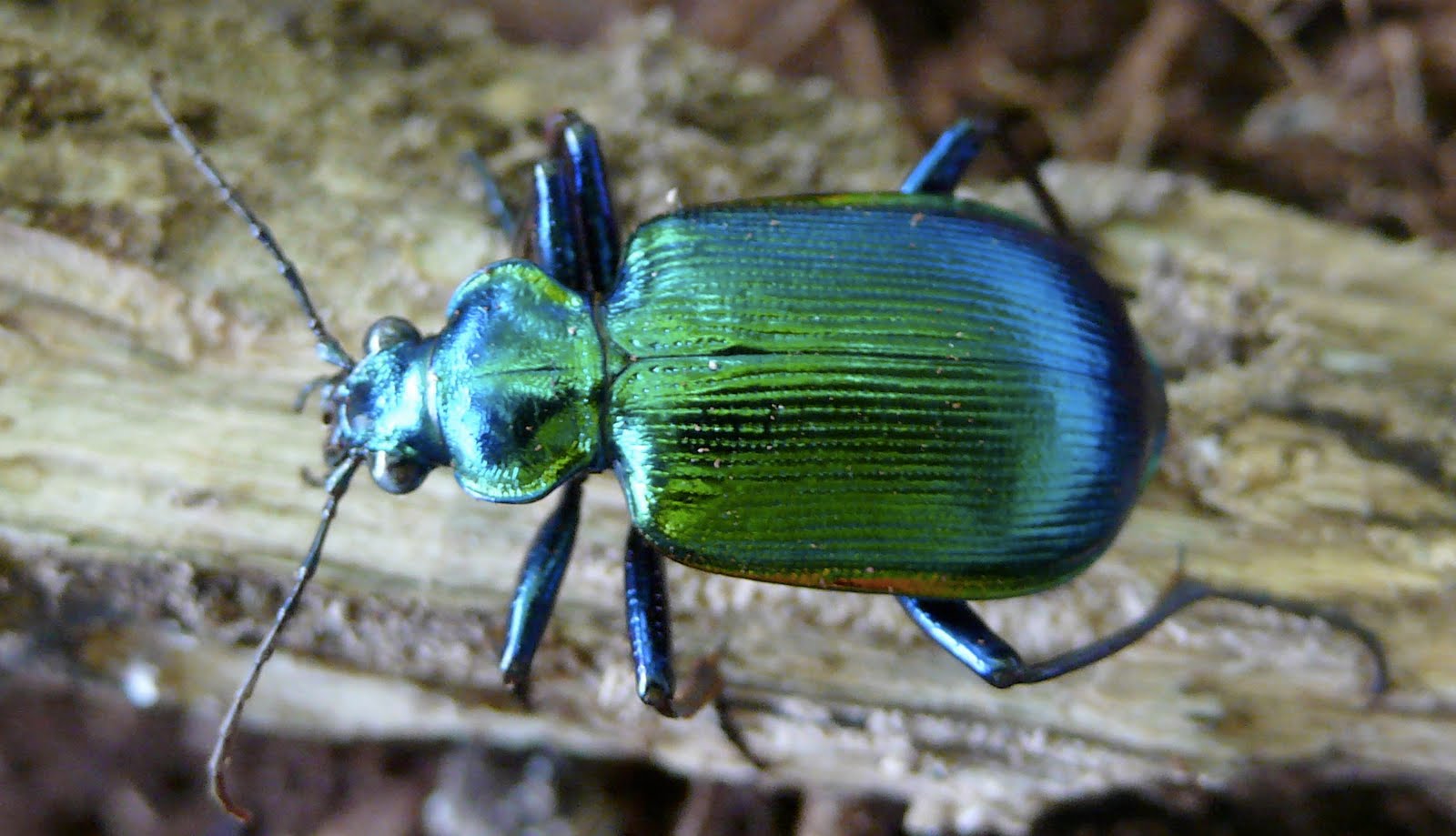
After buying an icy refresco in a small pueblo about 40 minutes south of Mérida, we pulled onto a side road that runs a long distance through fields and trees where I was assured no one would care if I filled a few bags and buckets with the rich red soil found there. Working close to the earth, digging, and sorting out rocks and roots with your hands you end up noticing things that otherwise you wouldn't. The rivulets of sweat that I couldn't wipe from my eyes because my hands were too dirty did not keep me from spying this iridescent blue-green beetle about the size of a walnut scurrying away from the shovel. It must have been under some leaves we disturbed with the pick axe. After detaining it long enough on a stick to take its picture, I let it go.


The next resident found under the leaf litter was this fat caterpillar, in its curled position looking a lot like a prehistoric Ammonite shell fossil, and just as still as one. No matter what I did to prompt it to move so I could see the motion of its many centipede-like legs, it showed no signs of life. We left it where it lay and replaced the protective blanket of leaves that we had disturbed.

Digging through leaf litter we found a lot of scorpions, alacranes in Mexican Spanish. It looked as if eggs had just hatched. There were many small scorpions such as this one, posing next to the tip of my pencil. I don't believe I have ever seen another this tiny. Small as it was, I did not touch it, assuming that although tiny, its venom still packs a punch. I did not want to test the theory.


A nearby tree was the next thing to catch my attention. The peeling bark of this tree sloughs off in large sheets, leaving fresh light-colored new bark beneath. As the newly-revealed bark ages it turns green in patterns created by the stencils of the fallen bark, then slowly assumes the rough reddish-gray color seen here. Then it, too, dries, separates, and falls in large curling pieces to leave new white under bark exposed to the air and light, beginning the process once again.

Once I started looking at the trees I saw this butterfly, at first with its wings folded and exposing only the dull gray undersides, which blended well with the tree bark. Suddenly it began to open and close its wings, flashing me with these bright neon-blue stripes. From a distance this movement contrasted against the shaded dark side of the tree really does resemble a light being switched quickly on and off. The butterfly did not seem disturbed by my presence. I was able to approach closely and take my pictures without startling it.

I often have the opportunity to observe tourists and it seems that they are normally drawn to in-the-face spectacular, big things, like pyramids and breathtaking ruins, the architecture of historic Mérida, long white beaches, red sunsets, and contrived, garish, over-the-top attractions like Las Vegas and theme parks. One of the nicest aspects of living in Yucatán is that, along with treasures like Chichen Itza, the coast, beautiful cenotes and lovely colonial towns, there is a never-ending wealth of smaller attractions awaiting discovery, not quite so obvious, but just as rewarding.

Saturday, July 24, 2010

Nature: Mariposas

Not long ago I was carefully making my away along a back-country road when, as I gained distance from the main highway and got further into monte, I noticed the increasingly thick clouds of butterflies, like animated yellow, white and green snowflakes, rising in front of my car. This time of year it is normal to see a lot of butterflies, mariposas, and the farther away you are from the contamination and chemicals of towns and agricultural areas, the more you are likely to see.

Along dirt roads during the rainy season, which we are in the middle of now, butterflies tend to congregate in the heat of the day to rest in shady areas and ruts where there is mud or dampness left from the last rainstorm. Here is what I found that day.


I apologize to my friends who knew me as a professional photographer and producer, and may expect a little higher quality. I was exploring and not out to make video that day. I had one shot at it with a handheld point and shoot camera on a dying battery. It's still a marvellous sight...just another of the many little surprises you encounter when wandering around Yucatán.
Powered By Blogger