Showing posts with label small things. Show all posts

Sunday, August 8, 2010

Nature: Close Up


I haven't posted much recently because I've been traveling and had quite a bit of work. I got home early last week and was submerged in piles of details for a few days, but on Friday I got away and spent some time in the country. The "excuse" was to get some potting soil and incidentally to explore a highway I'd never been on. After more than three weeks living out of a suitcase, teaching summer school to adolescents and spending a lot of time in airports, bus terminals and cities, I needed some quiet time.

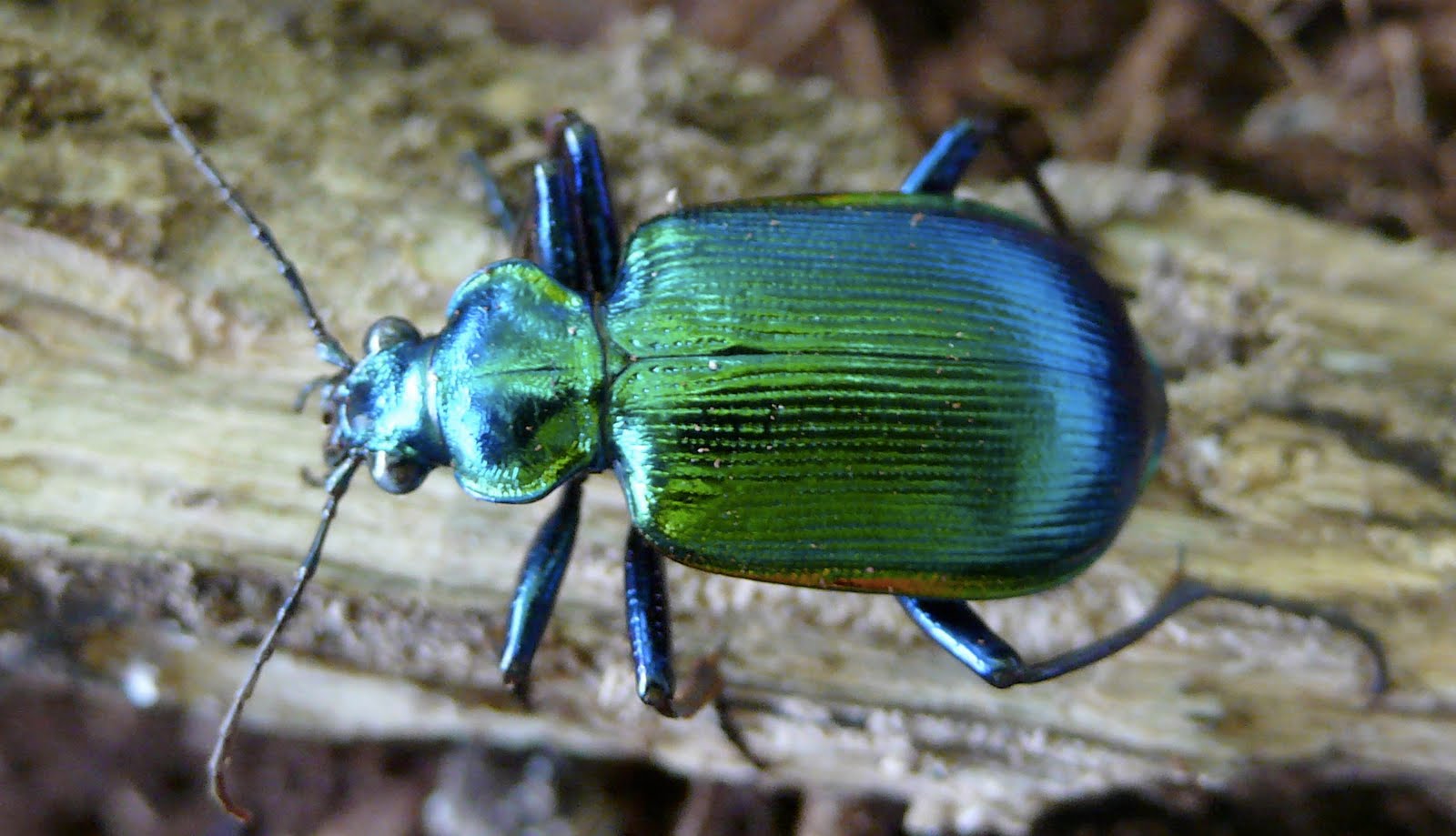
After buying an icy refresco in a small pueblo about 40 minutes south of Mérida, we pulled onto a side road that runs a long distance through fields and trees where I was assured no one would care if I filled a few bags and buckets with the rich red soil found there. Working close to the earth, digging, and sorting out rocks and roots with your hands you end up noticing things that otherwise you wouldn't. The rivulets of sweat that I couldn't wipe from my eyes because my hands were too dirty did not keep me from spying this iridescent blue-green beetle about the size of a walnut scurrying away from the shovel. It must have been under some leaves we disturbed with the pick axe. After detaining it long enough on a stick to take its picture, I let it go.


The next resident found under the leaf litter was this fat caterpillar, in its curled position looking a lot like a prehistoric Ammonite shell fossil, and just as still as one. No matter what I did to prompt it to move so I could see the motion of its many centipede-like legs, it showed no signs of life. We left it where it lay and replaced the protective blanket of leaves that we had disturbed.

Digging through leaf litter we found a lot of scorpions, alacranes in Mexican Spanish. It looked as if eggs had just hatched. There were many small scorpions such as this one, posing next to the tip of my pencil. I don't believe I have ever seen another this tiny. Small as it was, I did not touch it, assuming that although tiny, its venom still packs a punch. I did not want to test the theory.


A nearby tree was the next thing to catch my attention. The peeling bark of this tree sloughs off in large sheets, leaving fresh light-colored new bark beneath. As the newly-revealed bark ages it turns green in patterns created by the stencils of the fallen bark, then slowly assumes the rough reddish-gray color seen here. Then it, too, dries, separates, and falls in large curling pieces to leave new white under bark exposed to the air and light, beginning the process once again.

Once I started looking at the trees I saw this butterfly, at first with its wings folded and exposing only the dull gray undersides, which blended well with the tree bark. Suddenly it began to open and close its wings, flashing me with these bright neon-blue stripes. From a distance this movement contrasted against the shaded dark side of the tree really does resemble a light being switched quickly on and off. The butterfly did not seem disturbed by my presence. I was able to approach closely and take my pictures without startling it.

I often have the opportunity to observe tourists and it seems that they are normally drawn to in-the-face spectacular, big things, like pyramids and breathtaking ruins, the architecture of historic Mérida, long white beaches, red sunsets, and contrived, garish, over-the-top attractions like Las Vegas and theme parks. One of the nicest aspects of living in Yucatán is that, along with treasures like Chichen Itza, the coast, beautiful cenotes and lovely colonial towns, there is a never-ending wealth of smaller attractions awaiting discovery, not quite so obvious, but just as rewarding.

Friday, May 7, 2010

Yucatecan Still Lifes: Small Things


This is a praying mantis little bigger than my thumbnail, found scurrying up a plant stem one day alongside a road near the pueblo of Kantunil. Its dull green body was the color of the new leaves; its golden eyes sparkled in the sun. These insects know no fear. It sat confidently in my hand. When I neared it with a finger, it held its ground. When I moved my finger away, it rapidly chased as if in pursuit of prey.

I love to find beauty in small and unobtrusive things, and end up with interesting photos that don't really fit into a topic for this blog. So, this week, I'd like to share images of some small things, details that do not call attention to themselves, scenes unknown or easily missed by someone passing quickly or without paying careful attention.


Huayalceh is a hacienda south of Mèrida, where massive ruins of old colonial buildings dominate the scenery. However off on a side path exists a grotto whose well-worn stones indicate that people were likely coming here to dip cool water from a pool in its depths long before the Spanish came along, divided the land up and build these structures. You don't really notice the place unless you walk up close. The huge, gnarled trees and roots hanging over the cavern's entrance give it an ancient, mysterious feel. This looks like a good place to see aluxes (a-LOOSHes), the Mayan mythological equivalent of elves or little people who live out in the woods and possess supernatural powers. This might be an interesting place to visit under a full moon.


Later the same morning on which I passed through Huayalceh, I was looking for a store where I could buy a cold drink and stumbled upon the preschool in Junku, another hacienda a bit south of Mèrida. Junku is small, and there is likely only a single teacher in this one-room schoolhouse. I wrote recently about my love of the simple and elegant traditional Mayan house. Here is a beautiful one, curved white walls as perfect as a fresh chicken egg, constructed of plastered and whitewashed stone, with the traditional guano (palm frond) roof.

One day when I was looking at property near Izamal, the agent asked me if I wanted to see an old hacienda nearby. She knows the owner, and said it would be OK to take a look. There's a caretaker and the owner has slowly been restoring the main house so it's in pretty good shape, but still has an abandoned feel to it. The house was wide open and no one was around, so we walked through. It is a nice old place, with only a few rooms, but spacious, and apparently a true colonial, judging from the architecture. Among the interesting details are these original window openings, the design delicately molded into the plaster around the frames.

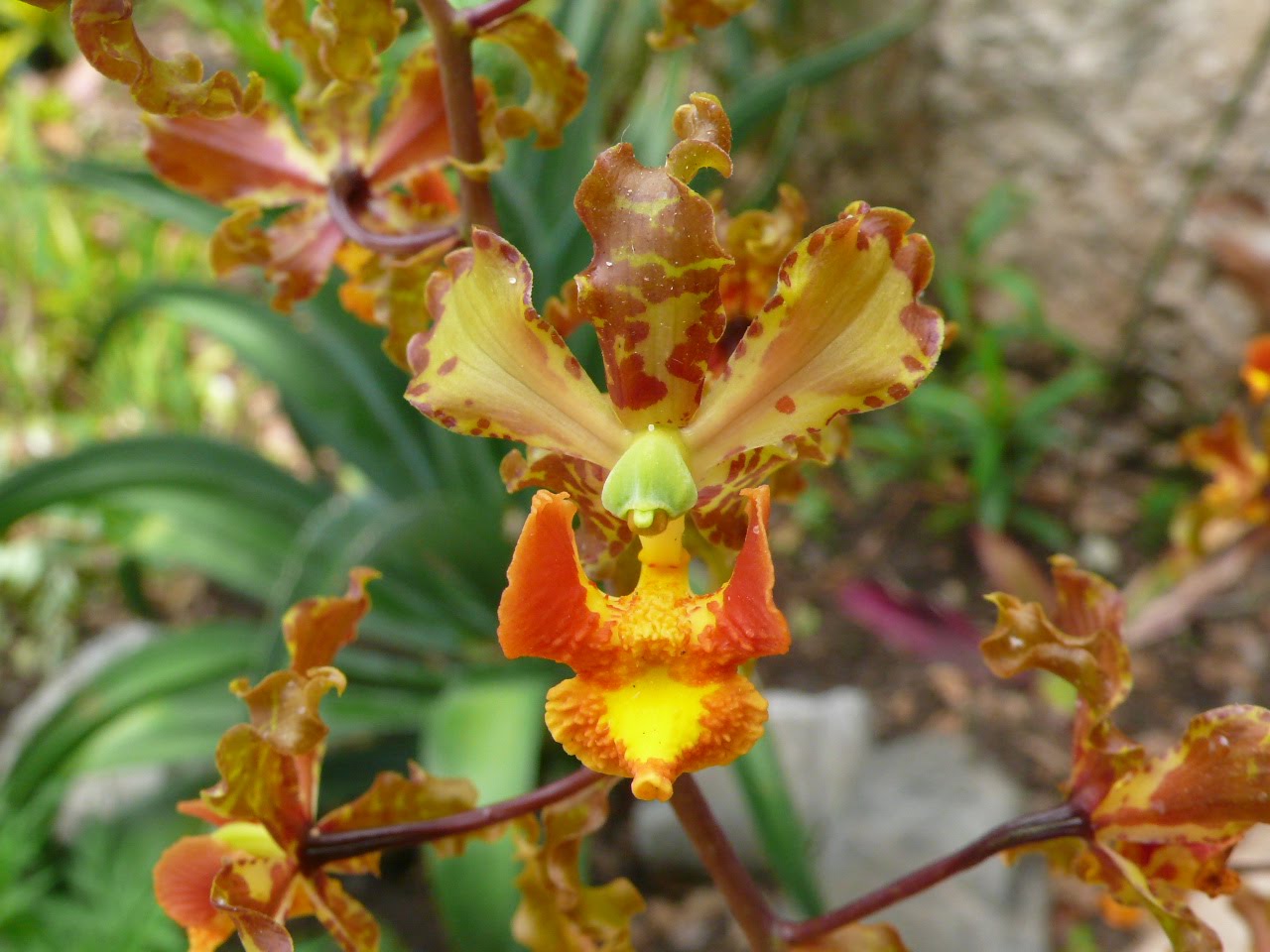
Where this orchid grows is a secret. I will say no more than that it grows somewhere in the state of Yucatàn, because I promised the friend who showed me the place that the location would remain protected. This bloom is one of more than one hundred similar blooms on a single plant. The stem on which the flowers grow reaches to above my waist; some examples are even larger. There are not just a few of these plants growing here. This is a colony of rare orchids, largely unappreciated by local residents, and therefore the plants remain unmolested.

Unfortunately here, as in places all over the world, publicity and popularity often destroy such wonders. If crowds come, there will be paths, trash, damage to the ecosystem, and flowers will be plucked and plants stolen. Many of the native orchids in Yucatàn are in danger of extinction due to agriculture, burning, and harvest of firewood, which destroys habitat. The other danger to the plants is that they are valuable. Orchids are pilfered from the wild by traffickers who sell them to collectors. I am glad that this place remains unknown, unappreciated, and in its natural state. I'll visit it to enjoy the spectacle and to take pictures, but I will not spread the word.

Powered By Blogger