Showing posts with label Yucatán. Show all posts

Tuesday, March 22, 2011

Images: Conservatism or Simplification?


As I occasionally do, this week I selected a few recently-made images to share. As I looked through picture files, I was surprised by the formality of the compositions. The images follow traditional rules: lines are often straight and direct the eye, forms geometric, spaces neatly delineated.


Oaxaca, Oaxaca: The red striped shirt and white hat popped out against a rectangle of shadow. This man was sitting alongside one of the buttresses of the La Catedral de Oaxaca. Directly above him was a large swath of pale green paint that had been used to cover political graffiti, which has become ubiquitous in the city over the past few years. I had one shot. The guy jumped up and walked away as soon as I had made this exposure.

It is sometimes the case as people get older that we become more conservative. We like structure, are less interested in novelty, and as the energies of our minds, bodies and health wane we take comfort in the routine and the predictable.


Skylight in old house, Juchitán, Oaxaca: I was attracted by the quality of light and the geometric shapes, especially the tiny triangle of light framed between handrail and balusters. I stayed two days in this house, which belongs to a friend of mine, but I didn't really see this stairway until the morning I left, when I noticed the shapes made by sunlight shining from a side window.

Looking at these images I began to think that in my photography perhaps I have become more rigid or conservative. These do not look much like the photos I took in my younger days, which many times were more immediate, off-balance and less composed.


Valladolid, Yucatán: I visited the Palacio Municipal, city hall, on the main square, and upon entering a gallery on the second floor was struck by the view of the church outside. The church has been beautifully lighted. I had taken some pictures of it outdoors, but when I found the frame of this balcony window I made my best image.

In most areas I am definitely not more conservative. Given the way things are in the world today, I cannot accept that the old social, political and technological approaches that have gotten us into a lot of these messes are the best way to creatively deal with the complex situations we find ourselves in.

However, as I get older I do find myself appreciating routine more and novelty less. Perhaps creating more structure in my photography is a way for me to feel secure by controlling what I share with others about my environment.


Hacienda San Antonio Xpakay: I fell in love with the landscape of this hacienda, owned by my friend Jonathan, when I first saw it a few years ago. The ancient and gigantic Pich, or Elephant Ear Tree, is a landmark, and the first visual sign, approaching on the long and winding access road, that the old casona is near. Visiting last weekend I was struck by this view of the Pich, seen through the hacienda gates, other trees and red bougainvillea. If I were a landscape painter, I would spend a lot of time on the hacienda with my sketchbook, canvas, brushes and paints.

After spending time working on this post, I have come to the conclusion that more than anything else, I am simplifying, eliminating the superfluous, making my life more straightforward. Is this conservative? I guess so, in a manner of speaking.


Another sign of the change is that I am not nearly as interested in travel as I once was. Often I am happy to stay at home and enjoy reading, creative projects, the garden, and getting together with friends and neighbors, often without leaving a few-blocks radius of the house for quite some time. I leave home less often, but when I do go I enjoy it more.


I and another friend stayed Friday and Saturday nights at the hacienda, a bit over an hour's drive from Mérida. The old house is large, and although comfortable, mostly unrestored and without electricity. Wandering in a side room I discovered this badminton raquet and a small religious print, hung casually on nails, not for effect but to keep them off of the unfinished floor. I like the haphazard arrangement against the nail holes and peeling colors of the wall.

One thing I enjoy about San Antonio Xpakay is that I have visited many times and feel right at home there. A couple of times (including the recent visit) Jonathan has not been at home when I arrive. He leaves the door open and food on the table. It is an uncomplicated place. It is easy to feel at ease there and enjoy the present moment.

It's possible I'm getting more conservative as I age, but what I am doing primarily is simplifying. I hope that this is a result of having learned a few things about priorities. I like to think that I am making wiser choices that enable me to enjoy more while needing, expending and consuming less.

Wednesday, November 3, 2010

People: "I Love You Too, Alberto"


I am at a bit of a loss. I have been gone quite a bit this year in order to help out my aging parents. For the second time in a matter of months I returned to Mérida to discover that a friend had passed away while I was absent, that the funeral was over, public mourning finished, and that the rest of the world had begun to adjust to the void, leaving me to catch up on my own.

* * *


I saw an enchanting painting, a colorful and mysterious portrait of a woman, hanging on the wall of a house in Mérida a few years ago. I asked my host where it came from, and learned that the artist lived not far from me, and although in his eighties was still busy working. Not long afterward, I met the man at a social gathering. His whispy hair was windblown, his precariously-perched glasses held together with adhesive tape, and his clothes spotted here and there with paint. The artist handed me his card. The black on white card pictured an artist's palette and brush and said simply, Alberto Castillo Ku, Pintor.

A few weeks later I called the phone number on the card and Alberto Castillo invited me over to his house in San Sebastian. As we got acquainted that afternoon we touched upon many subjects. We looked at paintings and photos and slowly wandered through his ancient, eccentric house and extensive garden. He cooked, and while eating the lunch we shared a couple of large bottles of beer. Over the next several years, visits like this one to Alberto's house became a regular and unforgettable part of my life.

Alberto Castillo was born in Mérida in 1920, and even as a child he liked to draw. When Alberto was about ten years old, his father bought the old colonial house in San Sebastian where Alberto lived off and on for the rest of his life. As a young man he was passionate about art, and against the advice of his father, decided to go to Mexico City to find work and study. There one day he wandered by a studio where Diego Rivera, probably the best-known and loved Mexican artist, was teaching. Alberto started talking with Diego, and was invited to sit in on the class. This began an exciting time in Alberto's life. He was a young man from an isolated provincial capital, suddenly immersed in cosmopolitan Mexico City of the 1940's. Communists, Nazis, spies, artists -- a fabulous mix of interesting figures -- were part of the scene there. Alberto lived near Diego and Frida Khalo, with whom he began to socialize. Included in this social set were the Mexican artist Miguel Covarrubias and his wife Rosa, the American writer Alma Reed, who was once the lover of executed Yucatecan socialist Felipe Carillo Puerto, and many other figures in Mexican and international art, intellectual life and politics of the era.

After many years in Mexico City, Alberto married and was living in Acapulco, where he had a studio and small restaurant. Acapulco then was a trendy hot spot, with foreign tourism just taking off in the area. Movie stars, the rich and the famous all made appearances in Acapulco, and Alberto's place was right in the thick of things. Then suddenly, after giving birth to their two sons, Alberto's wife became ill and quickly died.

At this point in the story there are gaps in my knowledge, partially because I never asked a lot of questions when Alberto began telling stories, and perhaps because my memory for the details a few years later is not all that good. After leaving Acapulco, Alberto made a living mostly from art and his culinary skills, working in Mexico, many years in the United States where he made many lifelong friends and became fluent in English, and finally returning to Mérida to live with and help his aging parents. For many years Alberto ran a restaurant out of the Mérida family home. And always, always, until unable to during the last few years of his life, he painted.


All of the images in this blog post are from paintings sold to me by Alberto Castillo. Most are works completed in the later years of his career, when his skills, due to arthritis and deteriorating vision, were past their peak. I have seen a number of examples of work from the height of his abilities that would have made his old teacher Diego proud. The sense of light and energy, the sensuality, presence and fine techinque in some of these works are witness to the mastery Alberto achieved in his art, thanks to talent, passion, hard work, and to teachers like Diego. Although most of my "Castillos" were painted in the later years of his career, I have a couple examples of earlier work. Below is a detail of a 1970's painting of a woman from Chiapas "in the style of Diego," as Alberto put it, which hints at the life he could project and attention to detail that he was capable of in his prime.


Alberto painted original religious and Mexican subjects and to pay the bills in later years also made copies of paintings for churches and individuals. Yucatecan daily life and Chiapas were favorite subjects of paintings. Above, a late painting of Chiapanecan musicians that hangs in my living room. At right, a portrait of a young man from Chiapas. Above, near the top of this post, a Chiapanecan woman on her wedding day.

His Catholic faith was important to Alberto, and it was a significant influence in his art. This portrait of Jesus and the Sacred Heart is one that he painted for his mother and which hung in her room for many years.


Alberto's studio was located in a roofed patio area at the back of the house. It was a hodge-podge of paintings, sketches and sculptures, memorabilia, tools, bundles of canvas and wood for stretchers, works in progress, paint tubes and containers of other liquids, brushes, and many years' accumulation of bric-brac and found objects that one day might be useful in a project. The area was bright and airy, which made it a good place for working. And like the rest of the house, the studio leaked like a sieve in the rain.


I recall an afternoon in the dining room. We were seated at the table, which was always set with a complete service for eight, plates on metal chargers, cloth napkins, wine glasses and other service items, along with a collection of
unrelated objects that over time had accumulated here. The afternoon was darkening as a storm approached, so our meal was illuminated by the chandelier, which had been manufactured from an artificial Christmas tree, complete with decorations and lights, hanging upside down over the table. Alberto opened a bottle of beer and toasted the meal amidst rolling thunder. Just as we started to eat, the heavens opened and in a moment rain began to pour through cracks in the roof. One cascade began to fall right in the middle of Alberto's bald head. Alberto grabbed a baseball cap that just happened to be hanging on the back of the next chair and put it on. Then he looked at me for a second or two and laughed. "C'est la vie," he commented. We continued eating without further talk about the weather. After finishing, we walked through the house gathering the various buckets and pans, strategically situated under the worst leaks, and emptying the accumulated water in the garden.

I regret not having photos of the house. During the period I was spending a lot of time with Alberto, I was not doing much photography. I always said to myself that I ought to photograph his house, but preferred to enjoy his company in the moment rather than try to make images. The cluttered house and garden were a
museum of more than a century of family life and his interests that included art by his father, son and many friends, photos, antiques, stained glass, valuable religious art and artifacts, various collections, and furniture manufactured by Alberto himself. There were dining rooms whose roofs had gone years ago, but which were still furnished with tables and chairs from the long-closed restaurant. In one corner of the grounds lay a huge mound of wine bottles, the accumulation of decades in the restaurant business and enjoying fine drink. In the back grew a large ceiba tree, which is the sacred tree of the Maya people, with a bench underneath. Once Alberto told me that there was a baby buried in that spot, apparently the dead infant child of a young relative or family friend who stayed with the Castillo Ku family when she got "in trouble," many, many years ago.


There are more stories I could tell about Alberto Castillo. We went out drinking at his favorite bar, the expat hangout Pancho's in downtown Mérida. We took the bus and rode on errands in the city. We went out to dinner. I bought large paintings and before I had a car carried them across a good piece of Mérida centro to my house in the heat of the afternoon, prompting interesting conversations along the way. One painting, the large oil of Saint Michael with which Alberto poses in the photo of his studio above, was once lost when a hurricane-tossed tree landed on and collapsed the roof of Alberto's house. The storm then sent his possessions flying all over the neighborhood. The painting was later returned to Alberto by a friend who had found it. It now hangs in my front room.

Alberto loved fruit and knew a lot about plants, which he was always giving to me. Roots from plants growing on an outer wall of the house broke through the wall and hung down inside the bathroom. Alberto didn't cut them. Instead he painted a woman's lips and eyes on the wall and incorporated the roots as the hair in a new piece of living art, which happened to be right over the toilet. Every so often when I used the bathroom I noticed how the woman's hair had grown.

There was the story of the son whom Alberto had never met, the product of a love affair with an American woman years ago. His obvious pride in his grandson in France, also an artist, who had come to visit. Stories of friends who'd passed on, of whom there are many when a person reaches his late eighties. Through it all, Alberto's attitude seemed to be to enjoy life as much as possible. He was always saying with a smile, "such is life," as if to shrug off the problems and sadness that we all deal with at times. His other favorite saying, whenever someone thanked him, was, "don't say thanks, say more."

One of the last times I was with Alberto he suddenly looked at me, gave me a bear hug, and told me, "I love you." I could only reply, "I love you too, Alberto." About that time Alberto stopped painting and was having more pronounced health problems. He was no longer taking care of the house and was less able to handle his own personal care. I offered to help in the house but he mostly refused. Not long after this, one of his sons, who for some time had been trying to convince Alberto to move in with him over in Puerto Morelos, moved Alberto to a nursing home where his needs could better be taken care of.

Earlier this year a 30-year-old bonsai flamboyant tree that Alberto had given me suddenly dropped its leaves and dried up. I felt guilty because I had been gone a lot and feared that my lack of attention had been the cause of the loss. Then, when I heard belatedly of Alberto's passing, I thought again of that tiny, gnarled old tree that Alberto had started from a seed and taken care of for 25 years before he gave it to me, and I thought, "C'est la vie. More, Alberto, more."


Wednesday, September 22, 2010

Living Here: Heat


I just returned from my third round trip between Yucatán and Alaska in about seven months. I used to really notice the temperature transitions on these kinds of trips, but anymore the big changes don't bother me.

There was a time when I could not stand heat. I remember traveling from Alaska to warm climes and feeling as if I was going to die when the thermometer got above 85 degrees Fahrenheit (29C). When we moved to Miami and lived there for several years during my youth the air conditioning at home was always set at 68 degrees (20C). There were seasons when we hated going outside. When you opened the door, it felt as if someone walloped you in the face with a steaming hot, wet towel. We ran to the car, turned the AC on high, and battled over who got to sit by the air outlets.

Of the many reasons I moved to Yucatán, one was not that I wanted to live in extreme heat, but rather that I did not want to live so much in cold. There are milder climates nearer my ideal in other parts of Mexico, but I love Yucatán and so have learned to live with the weather. It's a good bit hotter here most of the time than in Miami. I have lived here for years without air conditioning and it's fine this way.

One thing I know now is that we felt uncomfortable in Miami because we kept the house so cool we never acclimated. If we had managed to get accustomed to a warmer inside temperature, the transitions to outdoors would not have seemed so extreme. We would have achieved better results dealing with the heat had we decided to live more with it.

Living with the heat is the answer to the problem. In Mérida I know people who love the heat, and I have come to believe that attitude can go a long way toward making heat bearable. A Yucatecan friend of mine embraces the heat and comments to me that he loves the feel of perspiration on his skin. Appreciating the energy that makes life on earth possible and finding ways to stop fighting it makes a lot of sense to me philosophically and environmentally. Deciding that the heat is not going to be a big problem, and then taking steps to minimize its impact goes a long way to making life in the tropics comfortable and pleasant.

Airflow and shade are very important. Living spaces with cross ventilation are more comfortable in hot weather, and high ceilings give heat and humidity a place to go above head level. One of the reasons the old colonial houses in Mérida are so popular with foreigners moving here is that they employ these types of design features to keep inhabitants cool. Fans are a huge help. I installed large-bladed ceiling fans in every room of my house and make liberal use of them, supplemented by floor fans in bedrooms. Once you live in a place for a while, you learn when to open and close which windows and doors in order to take advantage of breezes, keep sun out and the cool in. My routine of opening and closing parts of the house depending upon the time of day and weather keeps the house comfortable much of the time.

Clothing is important, as well, and besides using natural, breathable fabrics and loose garments I have only one rule: wear as little as possible. This is most easily done in the privacy of one's home and at the beach.

I can take a lot more heat when I am not working under pressure, or can pace myself and do things on my own schedule. Scheduling activities around the weather is probably the oldest way of dealing with heat. The siesta is maybe the best known of these strategies. I regularly take a siesta, planning work and energetic activities for early in the day and late in the evening, and reserve the heat of the afternoon for quiet activity or resting. Throughout much of Mexico, businesses and offices close or reduce staff in the afternoons so most employees can take a long, two-to-three hour break for lunch and a rest during the heat of the day. They then reopen late in the afternoon and keep their doors open into the evening. Evening meals are sometimes eaten as late as 9:00 or 10:00PM, when a lot of the day's heat has dissipated. In old urban neighborhoods, chairs are put out on the patio or sidewalk, doors and windows are thrown open, and families enjoy the night breeze and socialize with neighbors. As Mexico modernizes these practices are seen less, but they are still common, especially in the warmer parts of the country.


Generally I prefer to be hot in the outdoors rather than in an enclosed area, so I have open-air living spaces, and I use them. Trees rather than a roof provide shade, and shrubs and plants in place of cement surfaces keep temperatures down. A swimming pool, outdoor tub, sprinkler or shower -- anything that allows you to cover your body in cooling water from time to time -- provides instant relief in the heat. I take a quick dip or lounge in my backyard pool three or four times a day in hot weather. After the sun has gone down, rooftops provide access to breezes. Many homes in this area have rooftop terraces for evening relaxing and entertaining. While enjoying the cool of my rooftop I have a 360-degree view the city, stars, storm fronts and lightning passing in the distance, and observe owls and bats hunting in the night.


I started out living here without air conditioning because it didn't fit my budget. In renovating my house I was faced with a choice. I had enough money left to put air conditioning in the house or build the pool. I chose to have a pool and to worry about the AC later. I wired and plumbed the place for AC units, but after five years still have not put them in. Now I suspect I never will. Not using AC saves a lot of money and energy and lowers my impact on the environment. I have come to the conclusion that I don't need it. It's simpler this way and I live comfortably, so why bother?

Sunday, August 8, 2010

Nature: Close Up


I haven't posted much recently because I've been traveling and had quite a bit of work. I got home early last week and was submerged in piles of details for a few days, but on Friday I got away and spent some time in the country. The "excuse" was to get some potting soil and incidentally to explore a highway I'd never been on. After more than three weeks living out of a suitcase, teaching summer school to adolescents and spending a lot of time in airports, bus terminals and cities, I needed some quiet time.

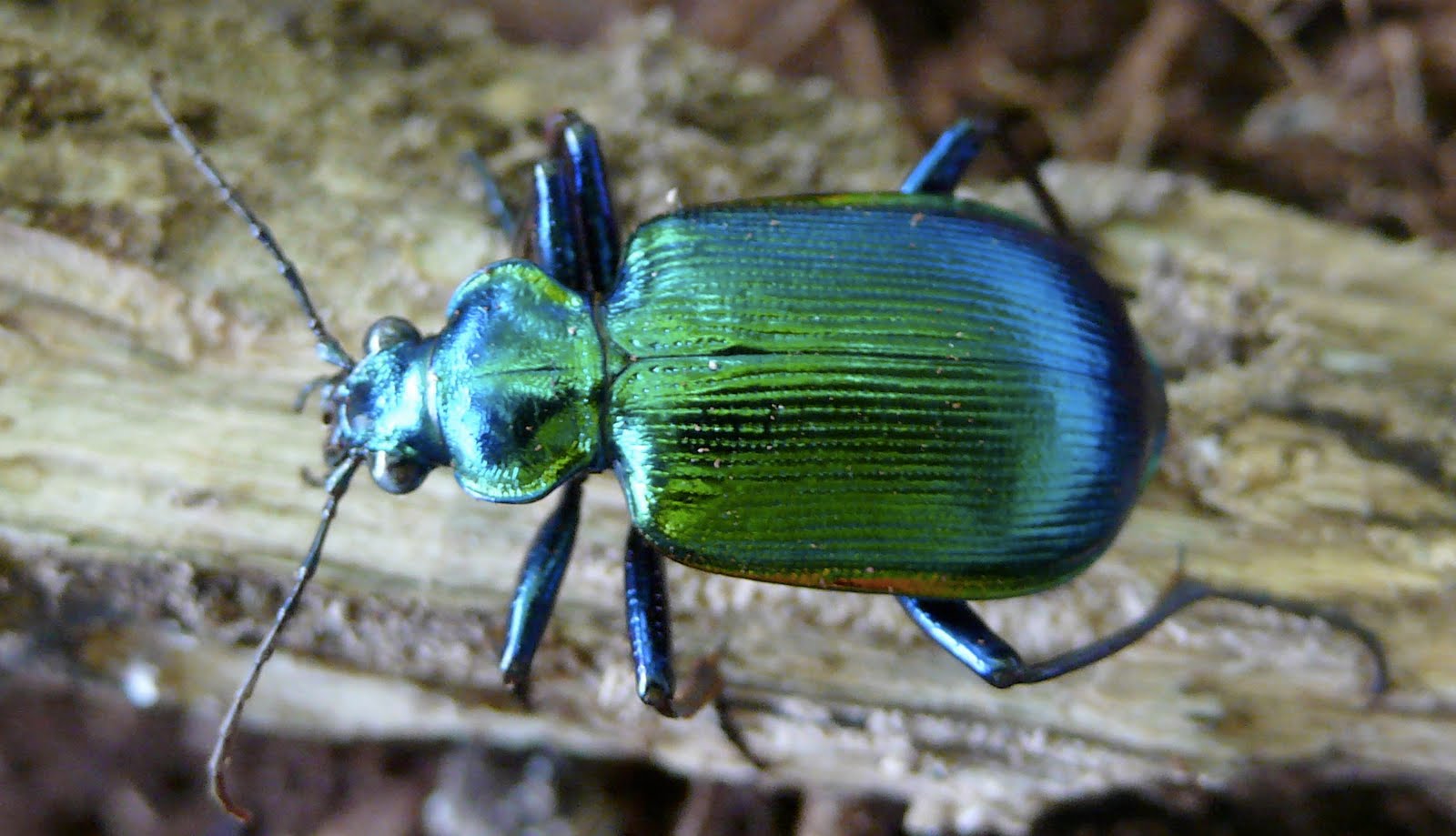
After buying an icy refresco in a small pueblo about 40 minutes south of Mérida, we pulled onto a side road that runs a long distance through fields and trees where I was assured no one would care if I filled a few bags and buckets with the rich red soil found there. Working close to the earth, digging, and sorting out rocks and roots with your hands you end up noticing things that otherwise you wouldn't. The rivulets of sweat that I couldn't wipe from my eyes because my hands were too dirty did not keep me from spying this iridescent blue-green beetle about the size of a walnut scurrying away from the shovel. It must have been under some leaves we disturbed with the pick axe. After detaining it long enough on a stick to take its picture, I let it go.


The next resident found under the leaf litter was this fat caterpillar, in its curled position looking a lot like a prehistoric Ammonite shell fossil, and just as still as one. No matter what I did to prompt it to move so I could see the motion of its many centipede-like legs, it showed no signs of life. We left it where it lay and replaced the protective blanket of leaves that we had disturbed.

Digging through leaf litter we found a lot of scorpions, alacranes in Mexican Spanish. It looked as if eggs had just hatched. There were many small scorpions such as this one, posing next to the tip of my pencil. I don't believe I have ever seen another this tiny. Small as it was, I did not touch it, assuming that although tiny, its venom still packs a punch. I did not want to test the theory.


A nearby tree was the next thing to catch my attention. The peeling bark of this tree sloughs off in large sheets, leaving fresh light-colored new bark beneath. As the newly-revealed bark ages it turns green in patterns created by the stencils of the fallen bark, then slowly assumes the rough reddish-gray color seen here. Then it, too, dries, separates, and falls in large curling pieces to leave new white under bark exposed to the air and light, beginning the process once again.

Once I started looking at the trees I saw this butterfly, at first with its wings folded and exposing only the dull gray undersides, which blended well with the tree bark. Suddenly it began to open and close its wings, flashing me with these bright neon-blue stripes. From a distance this movement contrasted against the shaded dark side of the tree really does resemble a light being switched quickly on and off. The butterfly did not seem disturbed by my presence. I was able to approach closely and take my pictures without startling it.

I often have the opportunity to observe tourists and it seems that they are normally drawn to in-the-face spectacular, big things, like pyramids and breathtaking ruins, the architecture of historic Mérida, long white beaches, red sunsets, and contrived, garish, over-the-top attractions like Las Vegas and theme parks. One of the nicest aspects of living in Yucatán is that, along with treasures like Chichen Itza, the coast, beautiful cenotes and lovely colonial towns, there is a never-ending wealth of smaller attractions awaiting discovery, not quite so obvious, but just as rewarding.

Saturday, July 24, 2010

Nature: Mariposas

Not long ago I was carefully making my away along a back-country road when, as I gained distance from the main highway and got further into monte, I noticed the increasingly thick clouds of butterflies, like animated yellow, white and green snowflakes, rising in front of my car. This time of year it is normal to see a lot of butterflies, mariposas, and the farther away you are from the contamination and chemicals of towns and agricultural areas, the more you are likely to see.

Along dirt roads during the rainy season, which we are in the middle of now, butterflies tend to congregate in the heat of the day to rest in shady areas and ruts where there is mud or dampness left from the last rainstorm. Here is what I found that day.


I apologize to my friends who knew me as a professional photographer and producer, and may expect a little higher quality. I was exploring and not out to make video that day. I had one shot at it with a handheld point and shoot camera on a dying battery. It's still a marvellous sight...just another of the many little surprises you encounter when wandering around Yucatán.

Friday, April 30, 2010

Living Here: Economy


When I began last year thinking about ideas for this blog I started a list, and near the top of that list I scribbled, Economy. This is the title of the first chapter of the American philosopher Henry David Thoreau's Walden, or Life in the Woods. It was in Economy that he wrote what have become probably his most famous words, "The mass of men lead lives of quiet desperation." The note was a reminder to myself that several of the chapters of this work, which I read for the first time in high school and have re-read several times as an adult, would make good models for entries in this blog. Thoreau wrote about why and how he lived alone in the woods for two years; a lot of this blog is about the why and how of living in Mèrida, Yucatan.

I was reminded of this topic again when I started reading, maybe two months ago, a blog called Hammock Musings from Mèrida, by a guy here who goes by the name of Hammockman Paul. He quotes Thoreau, and I enjoy his blog because it is thoughtful and in many ways Paul and I have similar interests and goals. So with apologies to HDT and to Paul, who has written about the economics of living here, inspired by Thoreau's detailed accounting of the economics of living by Walden Pond I am going to do the same thing.

I decided to do this because lots of friends up north seem to think that I must have become rich or have some kind of whopping retirement to be living here the way I do and at my age. And, a few are curious about the practicalities of living here. These are the ones who talk about coming down here to "check it out," with the idea of living here seasonally or permanently some day. The fact is that I live on less money than just about anyone I know up north. It's all a matter of setting priorities, simplifying and dedicating your resources to the most important and meaningful things, and not worrying about the rest. And, this can be a very economical place to live. So, for those who are curious, here is what my monthly expenses look like (converted to US dollars).

Home
First, I paid cash for my house and all improvements, so I do not have monthly rent or house payments to worry about. Although prices have risen, it is still possible here to buy a good house for about what you might pay for a nicer new car. House maintenance, things like paint, roof maintenance, electricians, plumbers and small parts and repairs (I do as much as possible myself): $100. Bank trust for the house and miscelleneous: $50. Property tax: $8. Garbage removal, curbside pickup three times per week: $2.50 per month. Electricity (I do not have AC, but run lots of ceiling fans, pool and well pumps, computer and a large refrigerator): $45. Natural gas (stove and water heater): $15. City water: $5. Telephone, which includes the local connection with 200 calls, unlimited long distance calling within Mexico, WIFI connection and rental of all associated hardware, and a low rate on international calls: $55. Cell phone (I have a plan that is pay-as-you-go, no calls, no charges): $25. House cleaner (sweeping, mopping, dusting of whole house, kitchen and bathrooms twice per week) and cleaning products: $80. Pool chemicals (I do the labor myself): $15. I stopped watching television years ago and don't have one, so I have no monthly cable bills. Home total: $400.50.

Auto
I paid cash for my used car so I have no car payments. I live in an area where you can walk to just about everything and don't drive much except for the occasional "big shop" at Costco or one of the malls, and for things like visiting plant nursuries, the beach and out-of-town trips, so monthly gas costs around $50, occasionally more if I take a long trip. Insurance: $50. Routine maintenance like tires, oil changes and small repairs: $50. Auto total: $150.

Personal
Soap, shampoo, toothpaste, clothing, shoes, and all personal and grooming items: $50. It is possible to buy good quality clothing here very economically. I get good polo shirts that last several years for about $7 each, but quality, longer-lasting jeans and shoes are a better deal in the States, so I buy there when visiting. I don't have a job to costume for, so jeans, polo shirts and running shoes or sandals are my uniform. I don't need much else. Health insurance and doctors are another great deal in Mexico. I have good private-carrier health insurance with a $250 deductible for about $100 per month. The facilities here in Mèrida are top notch, with many specialists trained in the US, and normally a doctor visit costs $45 (if one is really on a budget, it is also possible to go to a Farmacia Similar and see a general practitioner for $2). I find service to be more personalized here than up north. Personal total: $150.

Food and Fun
I don't spend a lot of money on things like alcohol, fancy restaurants or nightclubs because these things just don't interest me much. Value for the money they rate way down on the scale. However I eat out once or twice per day, and I also like to drink a coffee or iced mocha in an air-conditioned cafe in hot weather, or an open sidewalk cafe when possible. A couple of beers out with friends is an occasional pleasure. Small restaurants are one of the best deals in Mexico, with great, home-cooked food available for $2 - $3 per person. It's often cheaper for me to eat out than shop and cook at home. Cafes and eating out $250. Food, beverages, bottled purified water, movies, other going out and miscellaneous purchases $100.

I often shop at the local markets, where yesterday a friend found these mangoes for five pesos per kilogram, or about eighteen cents per pound. Coffee is another bargain here. Mexican coffee is among the best in the world, and I am picky about my coffee. I buy rich, fresh whole bean roasted coffee, prima lavado from the mountains of Veracruz for about $5.50 per pound. There are numerous regular cultural events that are free or low-cost. First-run movies at the theater three blocks down the street cost about $2. Food and Fun total: $350.

Total for all of the above: $ 1050.50. My monthly household budget is about $1050. Art, books, recorded music, gifts, furnishings, the occasional other luxury, computers, other technology (which is minimal) and travel are not included in that amount.

Travel
This one is not included in the above budget because it is variable and I do not consider it part of the cost of living here. It is my largest annual cost along with food. I travel to Alaska two or three times per year to see family and friends. I also travel quite a bit within Mexico; it's quite economical because high-quality long-distance buses and reasonably-priced hotels are the norm. I rarely pay more than about $35 per night for hotels and often pay less. A week-long trip I took last fall to Oaxaca, including round-trip airfare from Mèrida, three restaurant meals per day, concert tickets, taxis, buses and six nights in hotels set me back about $600.

In Economy, Thoreau wrote: "Most of the luxuries, and many of the so-called comforts of life, are not only not indispensable, but positive hindrances to the elevation of mankind." I continue to work at simplifying my life because I have found that by not having to work excessively to acquire and maintain unnecessary luxuries, and by simplifying my comforts, I have been able to afford an abundance of the priceless, the greatest luxury of all: time.

Tuesday, April 13, 2010

People: Goodbye, Neighbor, and Thanks


My neighbor Alejandro died last week. I was out of town when it happened, and busy away from the house when I got back, so I didn't get the news until several days later.

Alejandro and I were not close, but he was my first friend in the neighborhood after I moved into my house in Mèrida a few years ago. He was an outgoing, gregarious type, always waving and saying hello, and I guess it was just in his nature to be the first one to start a conversation with the new guy on the block.

Alejandro was not a young man, but with his unlined face and continual smile he was energetic and always busy, so I was more than a little surprised when he told me several years ago that he was 75 years old. I would have sworn he was no more than sixty, and he might have passed for younger. He'd lost his wife at a young age and remarried, and worked many years as a taxi driver. He remained happy in his second marriage and together with his wife Ingrid raised a houseful of children, who now have families of their own.

Alejandro was always busy with projects, such as painting and repairing old cars he would buy, fix up, drive for awhile, and then resell. He told me he liked to work, and the problem-solving and tinkering involved with the cars, along with the incentive of making a little extra cash when he sold them, kept his mind and body agile and gave him something interesting to do.

Not that his days were empty. Various children and grandchildren were usually around, and the modest house full of activity. One of the last times I saw him, a few weeks ago, Alejandro was delightedly painting the house next door, which they had rented so his daughter and her family could move in. People from the U.S. often don't understand why different generations of a family would want to live in such close proximity. Here, people can't fathom how people from
el norte manage living so far apart from the company, affection and support of their closest loved ones.


Passing by on the street when Alejandro was outside working often entailed more than a casual "buenos dias." He loved to talk about what he was doing, and to find out what I was up to. I sometimes brought him my car and home maintenance problems for advice. The give and take usually ran on for awhile. It seemed as if the socializing for him was the main point of being out on the street, and that washing the car or fixing the tire was something he would get done but not particularly important in comparison.

Alejandro's family owns a ranch about an hour's drive outside of Mèrida, and many times he invited me to go with him for a couple of days and hang out. Unfortunately that's something we never did because I always had something else going on. I started thinking about that when another neighbor told me Alejandro had suddenly died of a heart attack earlier last week. One of the reasons I moved to Mexico was because I wanted to stop living in tomorrow (laboring on and on for that retirement, saving all year for that brief vacation, etc.) and start doing what I want to do now. I have gotten better at living in the now, but the fact that I had put off the ranch visit time and again until it was too late bothers me. I looked forward to that trip as much as I liked Alejandro; he was a nice guy and we probably could have been better friends. I take all this as another of those little messages that life sends us, if we only will pay attention to them, telling us maybe we need to make an in-course correction along the way. I am taking it seriously.

Once my train of thought got rolling along these lines, I started thinking about how happy and successful this neighbor had always seemed to me. He was not a wealthy man, in fact by many Americans' standards he would have been considered poor. Alejandro and his wife raised a large family in a small three-room (not three bedroom, three room) house, where they lived for at least forty years. He didn't have a lot of stuff. His thirty-year-old cars were worth at most a few hundred dollars, and sometimes were broken down. But he always, even when under a balky car and covered with sweat and grease, seemed to enjoy living in the present and have a good time.

I read not long ago that Mexicans have among the highest levels of personal happiness in the world. I think that Alejandro is a good example of some of the reasons for this. It looks to me as if my late neighbor's success in life boiled down to a few simple points. He liked to be happy, so he usually was. He had a good attitude and didn't let small irritations or things beyond his control ruin his day. He was completely authentic: he had no "image" to maintain. He enjoyed everything he did as best he could. He seemed to be more interested in relationships -- his family, friends, and neighbors -- than in things or schedules. I think these qualities gave meaning to the life of a humble and modest man, and filled it with affection and love.

There is an example and a message here.

Adios, vecino, y gracias.

Powered By Blogger